
Web Development Services Python…
The Evolution of Python Services in WordPress
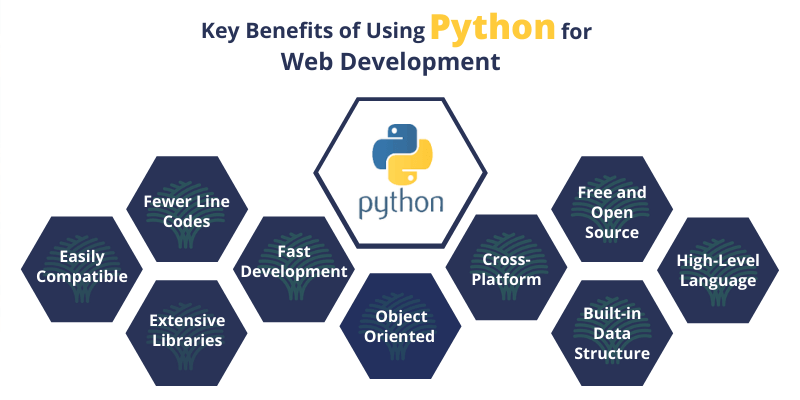
Over the years, the integration of Python services into the WordPress ecosystem has undergone a remarkable evolution, transforming the way developers approach website development. The synergy between Python and WordPress has paved the way for enhanced functionality, improved performance, and greater flexibility. This journey is marked by six key milestones that have played a pivotal role in shaping the seamless integration of Python services into the WordPress platform.
1. Genesis of Integration:
The inception of this service within WordPress dates back to the early 2000s. Developers recognized the need for a versatile, high-level programming language to augment the capabilities of WordPress. Python, with its simplicity and readability, emerged as the ideal candidate. Initial integration efforts focused on establishing a foundation for communication and collaboration between WordPress and this service, laying the groundwork for future advancements.
2. WordPress REST API and Python:
A significant breakthrough occurred with the introduction of the WordPress REST API, which facilitated communication between WordPress and external applications, including those built with Python. This API became a bridge, allowing this service, applications to interact seamlessly with WordPress, enabling dynamic content creation, modification, and retrieval. The REST API marked a turning point, expanding the horizons of what could be achieved by combining this service, prowess with WordPress functionality.
3. Django Framework Integration:
The integration gained further momentum with the incorporation of the Django framework. WordPress developers, recognizing the power and elegance of Django, began incorporating it into their projects. The Django framework’s robust features, including its ORM (Object-Relational Mapping) system and clean, pragmatic design, complemented WordPress, enhancing its capabilities in content management, user authentication, and more. This integration exemplified the harmonious coexistence of Python and WordPress technologies.
4. Python-Based Plugins and Extensions:
As the community embraced the amalgamation of Python and WordPress, a surge in the development of this service-based plugins and extensions ensued. These extensions catered to diverse needs, ranging from data analytics and machine learning integrations to custom content generation. This service’s expansive library ecosystem played a pivotal role, empowering developers to create feature-rich plugins that seamlessly extended WordPress functionalities.
5. Microservices Architecture:
The evolution reached a new zenith with the adoption of microservices architecture. Developers leveraged this service to build microservices that could operate independently while seamlessly integrating with WordPress. This modular approach enhanced scalability, maintainability, and overall system robustness. Python-powered microservices became integral components, allowing WordPress sites to handle complex tasks efficiently.
6. AI and Natural Language Processing Integration:
In the latest phase of integration, this service have made significant strides in incorporating artificial intelligence (AI) and natural language processing (NLP) capabilities into WordPress. From chatbots for user engagement to content optimization through sentiment analysis, Python-driven AI applications are reshaping the user experience within the WordPress ecosystem.
7. Enhanced Developer Productivity:
The integration of Python services into the WordPress ecosystem has significantly elevated developer productivity. The simplicity of this service’s syntax and its extensive library support have streamlined the development process. Developers now find themselves equipped with a powerful toolset, allowing them to create complex functionalities with fewer lines of code. This efficiency translates into quicker project turnaround times and a more agile development cycle.
8. Elasticsearch Integration for Advanced Search Functionality:
One notable extension of this service in WordPress revolves around integrating Elasticsearch for advanced search functionality. Python’s compatibility with Elasticsearch, a powerful search engine, has empowered developers to enhance the default WordPress search capabilities. Websites can now provide users with faster and more accurate search results, improving overall user satisfaction and navigation.
Conclusion
In conclusion, the journey of Python services in WordPress has evolved from a nascent integration to a sophisticated interplay of technologies. The collaboration has not only expanded the capabilities of WordPress websites but has also opened new avenues for innovation and creativity in web development. As this service continues to evolve, so too will its synergistic relationship with WordPress, ushering in a future where the amalgamation of these technologies sets new benchmarks in website functionality and user experience.